공인 SQLite 포렌식 교육

advanced level | certificate | 24 cpe credits | updated 2026

Learn SQLite forensics through a certified, hands-on training course built for professionals investigating mobile app data. Available On-Demand, Live Online and On-Site, it gives you the same depth, labs and case data in the format that fits your schedule. Updated for 2026, the course teaches you how to manually analyze and recover data that standard tools may miss, including deleted records, WAL files and unallocated space.

인증 교육

공인 SQLite 포렌식 교육

Learn SQLite Forensics through a certified, hands-on training course built for professionals investigating mobile app data. Updated for 2026, this course teaches you how to manually analyze and recover data that standard tools often miss, including deleted records, WAL files and unallocated space.

실제 시나리오와 새로운 CTF 과제를 중심으로 설계된 이 교육은 심층 포렌식 해석, 페이지 수준 디코딩, 고급 디지털 조사를 위한 실무 기술에 중점을 둡니다.

  • Advanced level
  • 3 days / 24 hours
  • 24 CPE 크레딧
  • 수료 증명서
  • No coding or scripting required
  • On-Demand: €1,299 per student
  • Live Online: By quote
  • On-Site: By quote

코스 목표

  • SQLite 데이터베이스의 내부 구조와 운영 메커니즘을 이해합니다.
  • Analyze and manually parse SQLite files, including headers, pages, freelists and overflow pages.
  • SQLite 분석에서 WAL 및 SHM 파일의 포렌식 관련성에 대해 설명합니다.
  • 삭제된 레코드의 낮은 수준 복구를 수행하고 데이터베이스를 수동으로 재구성합니다.
  • 디지털 조사를 위해 SQLite 아티팩트를 비판적으로 분석하고 해석하는 기술을 개발하세요.

Who should attend

This course is for mobile forensic professionals ready to go beyond default tool output. It is ideal if you are familiar with standard forensic platforms and want a deeper understanding of what gets parsed and, just as importantly, what often gets left behind.

Basic digital forensic knowledge is helpful. Prior advanced SQLite or SQL experience is not required. The course is designed for investigators, not developers. Techniques are visual, practical and explained step by step.

주요 코스 기능

  • Scenario-based learning from evidence discovery to expert reporting.
  • Tool-agnostic methods you can apply across forensic platforms.
  • Real datasets, practical labs and CTF-style forensic challenges.
  • Custom app parsing for deleted messages, media files and data fragments.
  • Practical validation methods for unsupported or incomplete tool output.
Course structure

What you’ll cover

A structured SQLite forensics course that moves from foundations and page-level analysis to deleted data recovery, database reconstruction, WAL/SHM interpretation and final assessment.

Daily focus

Day 1

Foundations and internal SQLite structures

Identify SQLite structures, decode varints and serial types, and manually parse live and deleted records from database pages.

Day 2

Database creation, behaviour and recovery fundamentals

Build and manipulate a database, observe how evidence changes at the byte level, and begin recovering deleted records from freeblocks and freelist pages.

Day 3

Advanced recovery, WAL/SHM analysis and assessment

Complete reconstruction work, analyze transaction files, recover evidence not present in the main database and complete the final practical and knowledge assessment.

Core skills

  • Manual SQLite interpretation Understand headers, pages, records, varints, serial types and B-tree structures.
  • Deleted data recovery Recover evidence from freeblocks, freelist pages, overflow pages and fragments.
  • Database reconstruction Rebuild damaged or incomplete structures and validate recovered records.
  • WAL and SHM analysis Interpret transaction files, map page versions and recover evidence outside the main database.
  • Tool-agnostic validation Verify commercial tool output and explain how evidence is stored and recovered.

Want the full syllabus with the day-by-day structure?

Training modules

Course modules

Five practical modules covering SQLite fundamentals, internal structures, database creation, reconstruction, deleted data recovery and WAL/SHM analysis.

01 SQLite 포렌식 소개 +
  • The forensic value of SQLite databases in modern mobile and application investigations
  • Limitations of automated tools and the importance of independent validation
  • Property lists, XML files and common application configuration data
  • Base64 encoding and manual decoding of embedded data
  • SQLite database fundamentals: tables, records, fields and data types
  • Introduction to B-tree organization and page-level storage
  • Protocol Buffers and their use in modern applications
  • Guided exercises, knowledge check and practical activity
02 SQLite Database and Page Structures +
  • The SQLite database header and key file-level values
  • Database page types and page header structures
  • Variable-length integers, or varints, and their role in SQLite
  • Record headers, serial types, payload lengths and manual record parsing
  • Freeblocks and remnants of deleted or modified records
  • Freelist trunk and leaf pages
  • Overflow pages and recovery of large records or BLOB data
  • Hex-level parsing practical using realistic forensic evidence
03 SQLite 데이터베이스 만들기 및 탐색하기 +
  • Create a working SQLite database based on a fictional messaging application
  • Define tables, fields, data types and relationships
  • Insert, update, query and delete records using SQLite statements
  • Navigate databases with a graphical SQLite browser and a hex editor
  • Compare the logical database view with the underlying byte-level structure
  • Observe how new records, page growth and deletions affect the database file
  • Use controlled changes to understand where forensic artifacts originate
  • Knowledge check and practical database-building exercise
04 Database Reconstruction and Recovery +
  • Case study: recovering deliberately deleted communications from a damaged database
  • Assess the database structure and identify missing or inaccessible B-tree components
  • Determine why standard viewers and automated recovery methods cannot access the evidence
  • Locate and interpret deleted records stored within freeblocks
  • Examine freelist trunk and leaf pages for recoverable table data
  • Identify page types, cell pointers, record boundaries and candidate evidence
  • Recover table data from freelist pages and convert page structures for analysis
  • Reconstruct missing B-tree navigation required to access recovered records
  • Create or repair an interior table page and restore logical page relationships
  • Validate recovered evidence against page-level structures and known database behavior
  • Document the reconstruction process and distinguish recovered data from original live records
05 Write-Ahead Log (WAL) and Shared Memory (SHM) Files +
  • Why SQLite uses WAL mode and the forensic value of associated transaction files
  • WAL header structure, frame headers, database pages, salts and checksums
  • How WAL files develop as records are inserted, modified, committed or overwritten
  • Identify multiple historical versions of the same database page
  • Understand the SHM file and its role as an index into WAL frames
  • Map database page numbers to WAL frames using SHM index information
  • Distinguish relevant page versions and recover evidence not present in the main database
  • Hands-on WAL/SHM mapping and evidence-recovery practical
Practical outcomes

What you’ll be able to do

The course combines guided explanation with hands-on work, realistic datasets, practical recovery exercises and a final assessment.

Manual analysis

Interpret SQLite structures and records without relying solely on automated tools.

Database reconstruction

Repair damaged or incomplete B-tree structures and validate the result.

Evidence recovery

Locate deleted data in freeblocks, freelist pages and transaction files.

Tool validation

Independently verify commercial tool output and explain how evidence is stored.

Forensic reporting

Explain what was recovered, where it came from and why it matters.

Practical assessment

Demonstrate your skills by interpreting SQLite structures, recovering evidence and explaining findings.

Need help choosing the right training format?

Who should attend

Built for mobile forensic professionals

This course is for mobile forensic professionals ready to go beyond default tool output. It is ideal if you are familiar with standard forensic platforms and want a deeper understanding of what gets parsed and, just as importantly, what often gets left behind.

It is especially valuable if you:

  • Work with mobile app data Analyze SQLite evidence from iOS, Android and other app-based sources.
  • Need to validate tool output Understand what commercial tools found and what they may have missed.
  • Investigate unsupported apps Build confidence working with databases that are not fully parsed by existing tools.
  • Recover deleted or hidden evidence Extract deleted records, freelist content, overflow data, WAL activity and fragments.
  • Prepare reports or expert opinions Explain database artifacts clearly for review, reporting, testimony or court.
  • Want structured, expert-led training Learn SQLite forensics through a practical workflow rather than isolated theory.

코딩이나 스크립팅이 필요하지 않습니다.

Basic digital forensic knowledge is helpful. Prior advanced SQLite or SQL experience is not required. The course is designed for investigators, not developers. Techniques are visual, practical and explained step by step.

Want to see the full course outline?

Why it’s different

Practical, visual and case-focused

This course is built to develop real forensic capability. You work hands-on with realistic data, solve investigative challenges and learn how SQLite behaves in real cases.

Scenario-based learning

증거 발견부터 전문가 보고까지 실제 조사 과제를 해결하세요.

도구에 구애받지 않는 접근 방식

Learn methods you can apply across forensic platforms and manual validation workflows.

사실적인 데이터 세트

Use real datasets in virtual environments with standard forensic tools.

Custom app parsing

Extract deleted messages, media files and data fragments, even without tool support.

SQLite 내부

Understand B-trees, varints, serial types, freelists, overflow pages, WAL and SHM.

Reporting and validation

Learn to explain what was found, where it came from and how it was validated.

Not sure if this course fits your team?

교수자

Learn from James Eichbaum

James Eichbaum is a well known digital forensics instructor and practitioner with deep expertise in mobile forensics, SQLite analysis and real-world investigative workflows.

Over the past 17+ years, James has trained thousands of professionals in more than 30 countries, with a consistent focus on practical skills, investigative accuracy and defensible forensic interpretation.

He has led advanced forensic training programs for law enforcement, defense and private-sector teams worldwide, including national police agencies and forensic labs.

In this certified course, James guides you step by step through SQLite internals, from page structures and WAL files to deleted data recovery and validation, using structured labs, realistic app data and CTF-style challenges.

LinkedIn에서 James와 연결

Career highlights

  • 17+ years teaching digital and mobile forensics
  • 전 MSAB 글로벌 교육 관리자
  • 캘리포니아 P.O.S.T. 공인 강사
  • Former Detective, Sacramento Valley High Tech Crimes Task Force
  • Former Special Deputy U.S. Marshal, FBI Cyber Crimes Task Force
  • Recipient of HTCIA Case of the Year award

Want to review the course outline or discuss training?

Certified SQLite Forensics

Practical training for real casework

Built around real-world forensic problems, practical recovery methods and clear interpretation of SQLite evidence.

James Eichbaum, digital forensics instructor teaching SQLite analysis to investigators
17+ Years teaching forensics
30+ Countries trained
24 CPE credits included
Training approach

The course is designed to make complex SQLite structures easier to understand, validate and explain without requiring coding or scripting experience.

Delivery formats

Choose the format that fits your work

The labs, case data and depth are the same. The only thing that changes is how you fit the learning into your schedule.

온디맨드

Self-paced training

EUR 1,299 per student

Learn when it works for you, at your own pace, with access to the course content, videos, lab files and practical exercises.

  • Equivalent to 3 days / 24 hours of training
  • Self-paced content, videos and lab files
  • Hands-on labs and CTF-style challenges
  • Knowledge and practical assessment
  • Certificate of completion and 24 CPE credits

온라인 라이브

Instructor-led remote training

By quote, groups of 3 or more

Join live sessions from anywhere, ask questions in the moment and work through labs with instructor guidance.

  • Instructor-led sessions with labs
  • Real-time questions and discussion
  • Shared delivery for teams
  • Same course depth and case data as classroom delivery
  • Certificate of completion and 24 CPE credits

온사이트

In-person team training

By quote, groups of 5 or more

Bring the course to your team with in-person training built around practical labs, discussion and your training goals.

  • Delivered at your location or agreed venue
  • Best for larger teams and organizations
  • Hands-on labs with instructor guidance
  • Scheduling by agreement
  • Group rates available

Not sure which format fits best?

Tell us whether you are looking for individual training or team delivery, and we will help you choose the right format.

Need manager approval? Download a short justification letter you can share with your manager, training coordinator or budget approver.

Download justification letter
인증

Certificate and 24 CPE credits

Participants receive completion documentation for professional records, internal reporting, audits and continuing education requirements.

수료 증명서

A signed certificate confirming completion of the Certified SQLite Forensics course.

24 CPE 크레딧

Supports continuing education records for forensic, cyber and investigative professionals.

Knowledge and practical assessment

Participants complete both knowledge checks and hands-on practical work.

Built for professional records

Suitable for internal documentation, training records and audit support.

Professional record

Built for defensible professional development.

The course supports practical skills, formal training records and repeatable forensic workflows that can be explained clearly.

Need confirmation about certification or CPE documentation?

Full course track

What you gain from the full course

A deep, practical training track for professionals who work with mobile extractions, forensic tools, app databases and SQLite-based evidence.

Course focus

Over three days, or through the equivalent on-demand format, you learn how to read, interpret, recover and validate data directly from raw SQLite structures.

The training combines guided explanation with hands-on practice using realistic datasets, deleted records, freelist recovery, overflow content, WAL/SHM interpretation and CTF-style forensic challenges.

The full course includes

  • WAL 및 SHM 파일 수동 디코딩
  • Recovery from freelist chains, freeblocks and unallocated pages
  • Database reconstruction and page-level validation
  • 실제 데이터 집합을 사용한 사례 기반 실습
  • CTF-style challenges designed for forensic use
  • 24 CPE credits and a certificate of completion
Delivery formats

Available on-demand, live online or on-site.

The course can be delivered as self-paced training, instructor-led live online training or on-site team training by request.

Want help choosing the right delivery format?

자주 묻는 질문

Frequently asked questions

Answers to common questions about course format, pricing, certification, labs, delivery and technical level.

01 전체 코스를 완료하는 데 얼마나 걸리나요? +

라이브: Delivered over 3 full days with instructor-led sessions, labs and interactive case studies.

온디맨드: The same core content in a self-paced format, equivalent to 24 hours of training.

02 Is the training updated for 2026? +

Yes. The course content is updated for 2026 and reflects current SQLite forensic workflows, modern app data, WAL/SHM analysis and practical recovery scenarios.

03 What delivery formats are available? +

The course is available On-Demand, Live Online and On-Site.

온디맨드: EUR 1,299 per student.

온라인 라이브: By quote, for groups of 3 or more.

온사이트: By quote, for groups of 5 or more.

Group rates are available.

04 팀 또는 기관 전체 교육에 적합한가요? +

Yes. Live Online and On-Site training are available for teams by request. We can help recommend the right format based on team size, delivery preference and training goals.

05 Do I need prior SQLite or SQL experience? +

Basic digital forensic knowledge is helpful. Prior advanced SQLite or SQL experience is not required. The course explains SQLite internals visually, step by step, with practical labs and forensic use cases throughout.

06 Do I need coding or scripting experience? +

No. The course is designed for investigators, not developers. Techniques are visual, practical and explained step by step. You do not need coding or scripting experience to complete the training.

07 어떤 종류의 실습이 포함되어 있나요? +

Labs include parsing deleted records, rebuilding overflow chains, exploring WAL/SHM files, recovering fragmented content and solving scenario-based challenges using realistic forensic datasets.

08 이 과정은 누가 가르치나요? +

The course is taught by James Eichbaum, a digital forensics instructor and practitioner with 17+ years of experience training law enforcement, forensic examiners, DFIR consultants and investigative teams worldwide.

09 What if I use tools like Magnet, Cellebrite, Oxygen or MSAB? +

This course complements commercial forensic platforms. You learn how to validate tool output, investigate unsupported apps and understand SQLite evidence beneath automated parsing results.

10 인증서가 인식되나요? +

Participants receive a certificate of completion with 24 CPE credits. It is designed for professional records, internal documentation, audits and continuing education tracking.

11 과정 중에 질문하거나 지원을 받을 수 있나요? +

Live participants can ask questions during sessions. On-Demand participants can contact us with course-related questions while working through the material.

12 실제 조사에 적용할 수 있나요? +

Yes. The course is built around realistic app data, practical recovery workflows and forensic scenarios that map directly to mobile and application database investigations.

13 코스에 CTF 스타일의 도전 과제가 포함되어 있나요? +

Yes. You work through CTF-style forensic challenges designed to reinforce technical SQLite concepts with practical investigation scenarios and realistic datasets.

14 이 과정은 얼마나 전문적인가요? +

It is a deep forensic course, but it is designed to be accessible. You go into SQLite internals such as WAL, B-trees, varints, freelists and overflow pages, with visual explanations and practical labs.

15 어떤 종류의 데이터 집합으로 작업할 수 있나요? +

The labs use realistic app databases involving messaging, location, application activity, deleted records, WAL activity, fragmented content and unsupported or partially parsed app data.

16 이 과정은 전문가 수준의 실무자에게 적합한 과정인가요? +

Yes. Experienced examiners, trainers and tool specialists use the course to deepen their understanding of SQLite internals, deleted data recovery and validation workflows.

17 WAL 및 SHM 분석이 포함되나요? +

Yes. WAL and SHM analysis are core parts of the course, including how to interpret database changes, reconstruct timelines and identify data not present in the main database file.

18 Is the training tool-agnostic? +

Yes. The course focuses on SQLite forensic principles and validation methods that apply regardless of which forensic platform you use.

19 이 지식을 모바일 포렌식 외부에 적용할 수 있나요? +

Yes. SQLite is used in desktop applications, IoT devices, browsers, cloud sync tools and many other systems. The recovery and validation skills apply anywhere SQLite appears.

20 How does this course connect to Firefly? +

SQLite remains central to modern app investigations. The course teaches the forensic methods behind SQLite analysis, including page-level interpretation, recovery and validation. Firefly carries the same principles into a broader forensic workspace for app data investigations across SQLite, RealmDB, LevelDB, IndexedDB and Apple Biome / SEGB.

이 과정에 대한 전문가들의 의견

아키라 H.

디지털 범죄 분석가
⭐️⭐️⭐️⭐️⭐️
이 과정은 기대 이상이었어요. WAL/SHM 구조와 수동 복구 워크플로우에 대한 설명을 통해 실제 조사에서 도구의 한계에 도전할 수 있는 자신감을 얻었습니다.

레나타 S.

모바일 포렌식 컨설턴트
⭐️⭐️⭐️⭐️⭐️
많은 교육을 받았지만 이번 교육만큼 몰입도가 높고 실용적인 교육은 없었습니다. 실습, CTF, SQLite 내부의 조합은 안드로이드 앱 데이터로 작업하는 데 매우 유용했습니다.

Jeroen V.

사이버 범죄 부서 수사관
⭐️⭐️⭐️⭐️⭐️
프리리스트 페이지를 수동으로 재구성하고 변형을 디코딩하는 과정을 통해 교육 후 몇 주 만에 사건을 해결하는 데 도움이 되었습니다. 제임스는 복잡한 주제를 명확하고 실용적으로 설명하는 보기 드문 능력을 가지고 있습니다.

Related content

이 집중 연습을 통해 수사관들은 iOS 16.x 기기에서 암호화된 Apple 메모를 추출하는 명확한 실습 기술을 습득할 수 있습니다. 기본 도구 출력을 뛰어넘도록 설계된 실용적인 단계별 프로세스를 따라 복잡한 사건을 효과적으로 처리할 수 있는 통찰력과 자신감을 얻게 될 것입니다.

특히 일관성이 없거나 익숙하지 않은 데이터베이스를 탐색할 때, 수동으로 VarInts를 디코딩하면 포렌식 프로세스가 병목 현상을 일으킬 수 있습니다. 이 도구는 해석 속도를 높여 더 심층적인 분석에 집중할 수 있도록 도와줍니다. 이 도구는 무료로 사용할 수 있으며 SQLite 내부를 직접 다루는 조사자를 위해 특별히 제작되었습니다.

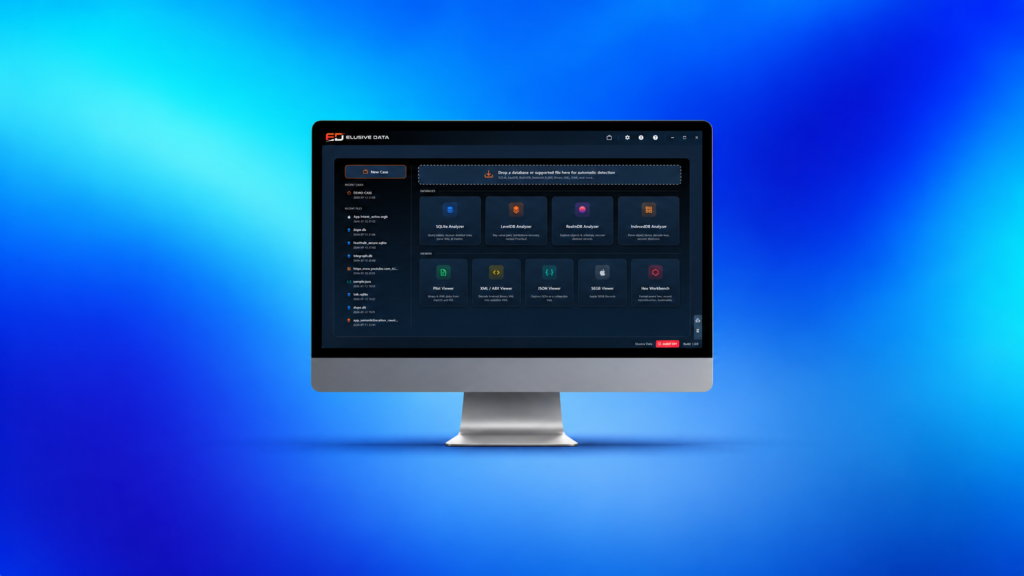
Meet Firefly. One forensic workspace for app data investigations, built on provenance. Recover, interpret, validate and report evidence across SQLite, RealmDB, LevelDB, IndexedDB and Apple Biome / SEGB, with every finding traceable back to its source.

This article shows how protobuf varints differ from SQLite varints and why that distinction matters in mobile forensics. It includes a full hands-on walkthrough of decoding a protobuf blob, extracting fields, and decrypting the final message.

A transformative, certified program designed to take digital forensic professionals from basic experience to confident Python proficiency. Newly updated for 2026, this hands-on training teaches you to build your own scripts to extract, parse, and analyze hidden evidence from app data.

단일 SQLite 페이지에 이미지나 미디어와 같은 대용량 콘텐츠를 담을 수 없는 경우, 해당 데이터가 오버플로 페이지로 유출됩니다. 이 가이드에서는 조각난 레코드를 수동으로 복구하는 방법을 안내하여 일반적인 조각화 도구가 종종 간과하는 증거를 보여줍니다.

최신 정보 유지

최신 소식을 받아보세요. 월간 뉴스레터에 가입하세요.

Be the first to hear about new training opportunities, new tools and updates, case-based blog posts, and practical insights. Our monthly newsletter is built to help you learn faster, solve cases smarter, and keep up in a field that never stands still.

가입하려면 이메일을 입력하세요.

교육 요청하기

이 요청은 완전히 구속력이 없습니다. 어떤 날짜가 적합한지, 얼마나 많은 참가자를 포함시키고 싶은지 알려주세요. 최적의 옵션을 함께 논의하기 위해 신속하게 연락드리겠습니다.

Mobile forensics 2026

Why SQLite still matters in mobile forensics

SQLite remains one of the most important storage formats in mobile app investigations, powering everything from chat histories and location data to app settings, cached media and application artifacts.

Tools can extract data. SQLite knowledge explains it.

Forensic platforms are essential, but they do not always parse every structure, support every app or show where a result came from. Evidence can remain in WAL and SHM files, overflow pages, freelists, deleted records, custom schemas and fragments that require deeper interpretation.

As mobile apps change quickly, examiners increasingly face unsupported databases, incomplete decoding and artifacts that need independent validation. In those situations, SQLite knowledge helps determine what the data means, how it was stored and whether a finding can be explained.

Certified SQLite Forensics is not a tool-button course. It teaches the forensic reasoning behind SQLite evidence: where data is stored, how deleted records remain, how transaction files preserve changes and how findings can be validated when automated parsing is incomplete or unsupported.

Practical outcome

More control when SQLite evidence is incomplete, unsupported or needs to be explained in a report, review or testimony.
복구

Deleted records, fragments and unallocated content

해석

Pages, records, B-trees, varints and schemas

유효성 검사

Tool output, WAL/SHM activity and recovered data

Explain

Findings for reports, review and testimony

Learn the SQLite evidence behind the tool output.

Certified SQLite Forensics is built for investigators who need to recover what standard views may miss, validate findings independently and explain SQLite evidence with confidence.